
RTO Combustion Chambers & Burners: Design, Function, and Why They Matter
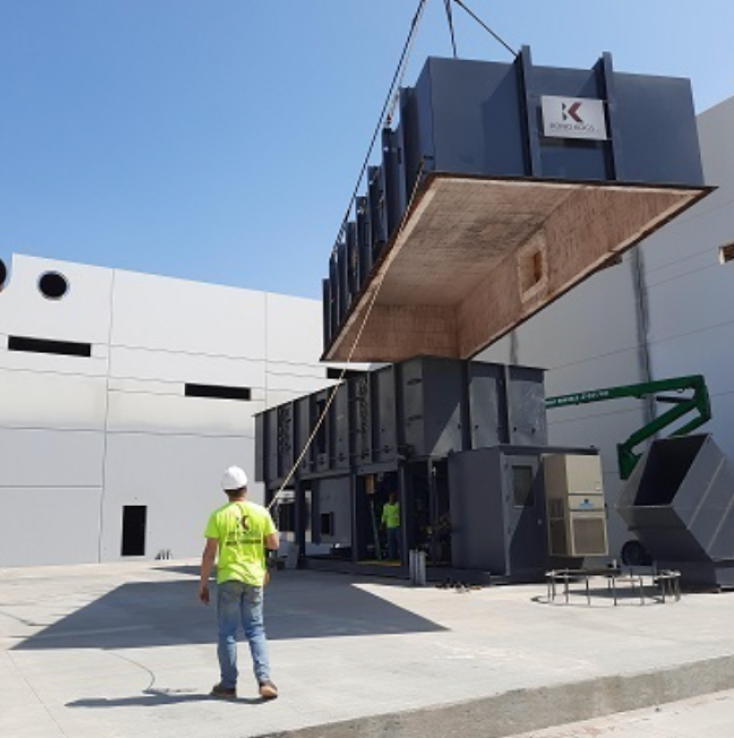
The combustion chamber is the high-temperature core of a regenerative thermal oxidizer (RTO). This is where VOC-laden process air is heated to oxidation temperatures, so pollutants break down into carbon dioxide and water vapor.
The burner supplies the heat, while the combustion chamber contains that heat and provides the temperature, residence time, and turbulence needed for complete destruction of contaminants. Understanding how this component works and how it’s maintained is essential for reliable oxidizer performance.
What is an RTO combustion chamber?
A combustion chamber in a regenerative thermal oxidizer is the insulated, high-temperature section of the oxidizer where most of the VOC destruction occurs.
Inside this chamber:
- Process air containing VOCs enters after passing through the heat-recovery media beds.
- A burner raises the temperature of the gas stream to the required oxidation temperature.
- The chamber holds the gases at temperature long enough for the oxidation reaction to occur.
The combustion process converts harmful compounds into simpler and safer byproducts such as:
- Carbon dioxide (CO₂)
- Water vapor (H₂O)
In most thermal oxidizers, destruction efficiency depends on three conditions being achieved simultaneously::
- Time – gases remain in the chamber long enough
- Temperature – high enough for oxidation reactions
- Turbulence – mixing ensures pollutants contact oxygen
These three conditions are commonly referred to as the “three T’s” of thermal oxidation. Combustion chambers perform a similar role in other types of thermal oxidizers, including recuperative and catalytic oxidizers.
Burner vs combustion chamber: what’s the difference?
In a regenerative thermal oxidizer, the RTO burner and the combustion chamber are both crucial to VOC destruction but serve different functions.
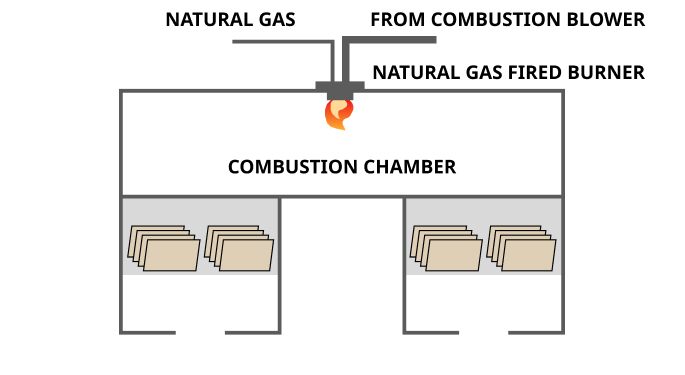
The burner is the heat source that fires into the combustion chamber where the flame and heated gases raise the temperature of the incoming air stream in a controlled reaction environment. Without the chamber’s insulation and geometry, the burner alone could not maintain the conditions required for reliable VOC destruction. While the burner flame provides the heat source, most VOC oxidation happens in the high-temperature space within the combustion chamber, not directly in the flame itself.
RTO burner performance and fuel efficiency
In a regenerative thermal oxidizer, the burner’s primary role is maintaining the combustion chamber at the temperature required for VOC destruction. During normal operation, incoming process air is preheated by the ceramic media beds before entering the combustion chamber. Thanks to this heat recovery, the burner can operate intermittently instead of continuously.
Ideally, when the combustion chamber is properly insulated and the oxidizer is operating efficiently, the burner only needs to supply enough heat to sustain the required oxidation temperature.
Several factors influence burner performance and fuel consumption in an RTO system:
- Refractory condition: Damaged or degraded refractory insulation allows heat to escape from the combustion chamber, forcing the burner to fire more frequently to maintain temperature.
- Process VOC concentration: Some process streams contain enough VOC energy to partially sustain combustion once the system reaches operating temperature, reducing burner demand.
- Airflow rate: Higher airflow requires more heat input to maintain the required oxidation temperature and residence time.
- Temperature control systems: Modern oxidizers use temperature sensors and control systems to regulate burner firing and maintain stable chamber temperatures.
Proper burner maintenance supports stable operation, efficient fuel use, and consistent emissions performance.
Where the combustion chamber fits in the RTO process
A simplified RTO process looks like this:
- VOC-laden process air enters the oxidizer.
- Air passes through a preheated ceramic media bed, absorbing heat recovered from previous cycles.
- The pre-heated air enters the combustion chamber, where the burner raises the temperature.
- VOCs convert into CO₂ and water vapor.
- Clean exhaust passes through another media bed to transfer heat for the next cycle.
The combustion chamber is the point where most of the oxidation reaction actually happens. However, this reaction occurs throughout the entire duration the exhaust is in both the media and combustion chambers. Everything upstream prepares the air stream, and everything downstream recovers energy from it.
Because the combustion chamber directly affects several critical aspects of oxidizer operation (destruction efficiency, fuel consumption, regulatory compliance, and more), it’s one of the most important components in the entire system.
Working principle: How combustion chambers achieve effective VOC destruction
For an oxidizer to achieve high destruction efficiency, the chamber must maintain the three critical process conditions.
Temperature
Most thermal oxidizers operate between roughly 1,400°F and 2,000°F, depending on pollutant characteristics and regulatory requirements. Temperature must be stable and evenly distributed across the chamber, because cold spots can lead to incomplete oxidation.
Residence time
Residence time refers to how long gases remain inside the combustion chamber at the required temperature. Typical residence time ranges from 0.5 to 1.0 seconds (optimal residence time depends on chamber volume and gas velocity). Residence time allows oxidation reactions to fully convert VOC molecules into their final byproducts. If residence time is too short, VOC molecules may not fully oxidize before exiting the chamber, reducing destruction efficiency and potentially affecting emissions compliance.
Turbulence
Turbulence promotes mixing between VOC molecules, oxygen, and hot combustion gases. Proper mixing prevents incomplete oxidation and improves destruction efficiency. Both chamber geometry and burner placement affect mixing.
Key design features of RTO combustion chambers
Designing an effective combustion chamber requires balancing thermal efficiency, durability, flow stability, and serviceability. Several chamber features play a role in achieving this balance:
- Chamber volume: The chamber must be sized to maintain required residence time at the system’s maximum airflow rate. Undersized chambers reduce destruction efficiency, while oversized chambers increase capital cost and footprint.
- Refractory lining: High-temperature refractory materials (such as firebrick, ceramic fiber insulation, silicon carbide, and others) insulate the chamber and protect the outer steel shell. The refractory lining also helps retain heat, reduce outer shell temperature, and protect against chemicals and thermal shock.
- Chamber geometry: RTO combustion chambers can be cylindrical, rectangular, or have multiple zones. The geometry of the chamber affects heat distribution, gas flow patterns, mixing, and turbulence.
- Thermal expansion allowances: Because combustion chambers operate at very high temperatures, the design has to allow for thermal expansion of the internal materials. Expansion joints and proper refractory installation prevent cracking or structural damage from heating and cooling cycles.
A well-designed chamber maintains stable operating temperatures, supports proper gas mixing, and protects the oxidizer structure from extreme heat. The combustion chamber isolates the burner flame from upstream equipment, providing safe and stable combustion within the oxidizer system.
Video: Inside an RTO combustion chamber
This video provides a visual overview of the interior of a combustion chamber inside a regenerative thermal oxidizer.
Common combustion chamber issues in oxidizers
Over time, high temperatures and constant thermal cycling can affect combustion chamber components and cause problems like:
- Refractory cracking or spalling: Refractory materials can crack from thermal stress, mechanical vibration, or chemical exposure. Left unaddressed, damaged refractory reduces insulation and can expose the shell to excessive heat.
- Hot spots: Hot spots on the oxidizer shell may be a sign of insulation failure, refractory damage, or uneven heat distribution (all of which can shorten equipment life).
- Burner performance problems: Burners can have issues including ignition problems, unstable flame, and inefficient combustion (all of which can affect temperature control and overall oxidizer performance).
Burner and combustion chamber inspection, rebuilds, and upgrades
Because the combustion chamber is exposed to the most extreme conditions in the oxidizer, it’s one of the components that benefits most from regular inspection and may be more likely to need refurbishment over time.
Typical burner and combustion chamber maintenance services include:
- Refractory lining repair or replacement
- Ceramic media replacement
- Cold face repair
- Burner inspection and tuning
- Chamber structural repairs
- Spark ignitor and flame sensor cleaning and testing
- Fuel valve, nozzle, and regulator inspection and calibration
- Verification of fuel-to-air ratio (burner “tuning”)
- Temperature monitoring and diagnostics
Kono Kogs provides on-site services including repair, rebuilds, and upgrades for your RTO combustion chamber, burner and any other components. We also offer preventative maintenance to ensure combustion chambers continue operating safely and efficiently throughout the system’s lifespan. We highly recommend regular inspection of both the RTO burner and combustion chamber to identify any issues early and avoid unplanned downtime.
Combustion chambers: the heart of your RTO
In a regenerative thermal oxidizer, many components support the system: valves, media beds, ductwork, and controls.
But the combustion chamber is the centerpiece of the oxidation process, and where most of the VOC destruction actually happens. The burner plus the chamber create the high-temperature environment where pollutants are broken down and emissions compliance is achieved. Proper design, monitoring, and maintenance of this component are essential for keeping an oxidizer efficient, reliable, and compliant.
If you made it this far, chances are you’re thinking about how your own oxidizer is performing. Whether you’re troubleshooting a combustion chamber issue, planning preventative maintenance, or just trying to better understand your system, our team is always happy to talk through it.
If you're interested in learning more about how oxidizers work or how to maintain them for long-term reliability, our resource center covers everything from RTO components to system maintenance and upgrades.
RTO Burner & Combustion Chamber FAQ
Below are a few of the questions we commonly hear about RTO combustion chambers and burners. If something specific about your system isn’t covered here, our team is always happy to help.
The burner provides the heat required to raise the gas stream to the oxidation temperature needed to destroy VOCs.
Industrial oxidation systems typically use a natural gas-fired burner. It’s the most popular type because it offers clean combustion, precise control, and ease of integration into oxidation systems. Other options include forced-draft burners with dedicated combustion air blowers (mainly for very high-temperature operations), low NOx burners, and flameless burners which use natural gas injection as a supplemental heat source to maintain temperature after a typical burner performs the initial heat up. There are also flameless burners that use electric heating coils to bring the combustion chamber to temperature.
Operating temperatures typically range between roughly 1,400°F and 2,000°F - it varies by industry depending on the pollutants being destroyed and regulatory requirements.
If the combustion chamber temperature falls below the required oxidation temperature, VOC destruction efficiency can decrease. Proper control systems and burner operation maintain a high enough temperature to ensure regulatory compliance.
Residence time refers to how long gases remain at oxidation temperature inside the chamber. Typical residence times range from about 0.5 to 1.0 seconds (though again, this varies by industry as well as chamber design).
High-temperature insulation materials such as ceramic fiber insulation are commonly used to retain heat and protect the chamber structure.
The refractory lining insulates the combustion chamber and helps retain heat. If the refractory becomes cracked, worn, or damaged, heat can escape from the chamber, forcing the burner to fire more frequently to maintain temperature. Over time, this increases fuel consumption and can create hot spots that shorten equipment life.
Inspection frequency varies by system and operating conditions, but periodic inspection is important to detect refractory damage, burner issues, or thermal problems before they lead to system failure. We’re oxidizer experts so you don’t have to be - reach out to our team for guidance based on your specific process conditions.
