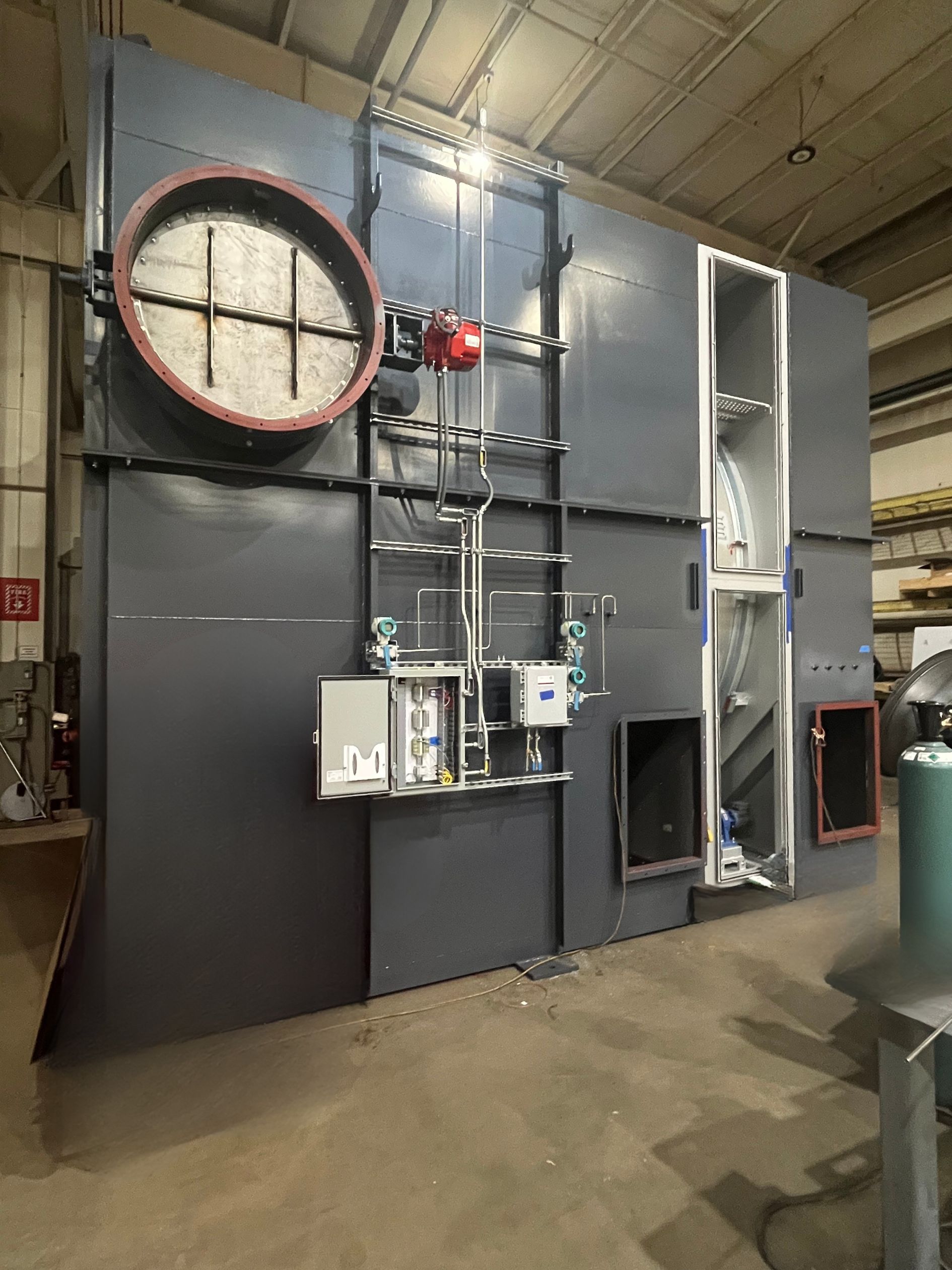
Is a VOC Concentrator Right for Your Facility?
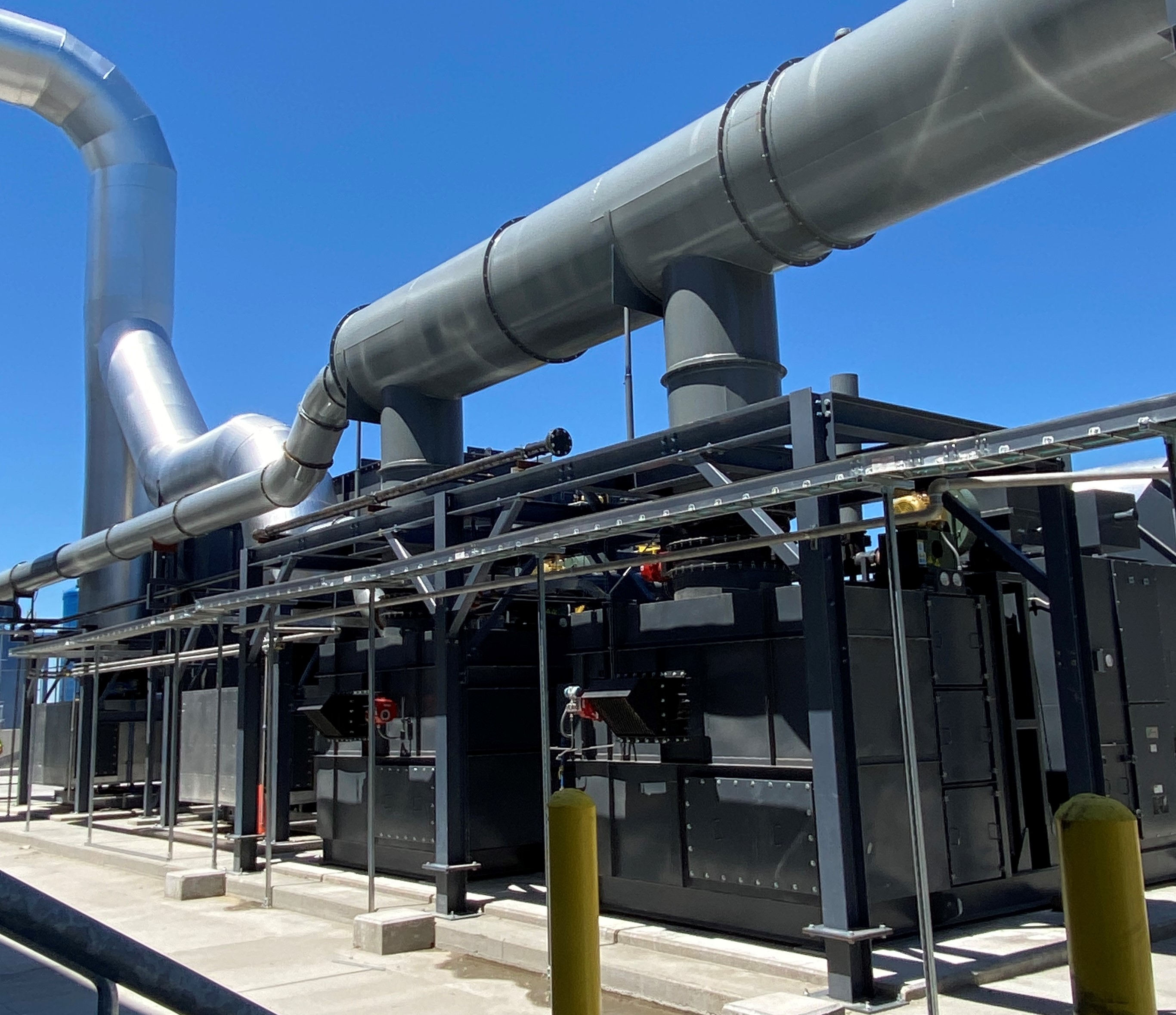
Is a VOC Concentrator Right for Your Facility?
A VOC rotary concentrator is worth considering when your facility generates a large volume of relatively dilute VOC-laden air. Instead of sending that entire airstream through an oxidizer, the concentrator captures the VOCs and concentrates them into a much smaller airstream for destruction. The result is typically a smaller downstream oxidizer and substantially lower fuel and electrical demand.
But high airflow and low VOC concentration are only the starting point. VOC chemistry, exhaust temperature, humidity, particulates, operating schedule, existing equipment and economics also factor in.
Use the decision tree below to see whether a VOC concentrator is likely a good fit for your facility.
VOC concentrator decision tree
Answer each question in order to learn whether a concentrator looks like a strong fit, a possible fit or probably not the right first option.
1. Does your process generate a large volume of air with relatively low VOC concentration?
Yes → Continue to Question 2.
Large air volume with low VOC concentration is the classic application for a rotary concentrator. The goal is to avoid heating and treating a very large volume of mostly air.
No → A concentrator may not provide enough benefit to justify the added equipment.
If your airflow is modest or the VOC stream is already relatively concentrated, direct treatment in an oxidizer makes more sense.
Unsure → Gather data on your airflow and VOC load.
Write down:
- Process airflow in SCFM or Nm³/h
- VOC concentration or mass loading
- Individual VOCs present
- Minimum, normal and maximum operating conditions
2. Are the VOCs compatible with adsorption on a zeolite concentrator wheel?
Yes → Continue to Question 3.
A VOC concentrator only works if the zeolite adsorbent can effectively capture the compounds from your process exhaust. The right wheel size and zeolite formulation depend on the VOCs being treated, which is why Kono Kogs evaluates both the process stream and the rest of the air pollution control system for every custom concentrator we build.
Maybe or unknown → Engineering evaluation is needed.
VOC concentration alone doesn’t make an application well-suited to a VOC concentrator. Two airstreams with identical airflow and ppm readings but different chemical compositions can behave very differently.
No → A rotary concentrator isn’t the right technology for all types of VOCs.
Some VOCs like those with an extremely high boiling point, VOC molecules that are bigger than the zeolite’s pores, or alkaline compounds are poorly captured or incompatible with zeolite adsorbents.
There are other adsorbent materials available besides zeolite (the most common choice), but there are also certain types of VOCs that simply aren’t compatible with VOC concentrators.
3. Is the exhaust cool enough for effective adsorption?
Yes → Continue to Question 4.
VOC adsorption generally favors relatively cool process air. That’s why concentrators are typically used with large, near-ambient exhaust streams like paint booths and coating operations.
No → Don’t rule out a concentrator just yet.
A VOC concentrator might still be an option unless all of the process air is hot.
For example, a facility could have a large cool booth exhaust stream plus a smaller high-temperature oven exhaust. Rather than forcing both streams through the concentrator, the system could concentrate the cool airstream and route the hot stream directly to the oxidizer.
Unsure → Measure the temperature across your facility’s operating conditions.
Measure exhaust temperature during normal, minimum and maximum production so the evaluation reflects the full range of conditions the concentrator would need to handle.
4. Is the airstream reasonably clean and manageable for the concentrator media?
VOC concentrator wheels can be contaminated by things like particulates, paint overspray, aerosols, oils, and moisture.
Yes → Continue to Question 5.
A relatively clean airstream needs less filtration and helps protect concentrator performance over time.
There are contaminants present → A concentrator may still work with pretreatment.
Particulates don’t automatically mean a concentrator won’t help, but they may change the filtration requirements, pressure drop, maintenance burden and economics of the overall system. Humidity can also affect adsorption performance.
Heavy contamination or difficult process conditions → Engineering evaluation needed.
The question isn’t always as easy as “Can a zeolite wheel handle the airstream?” Sometimes it’s necessary to consider whether the full system can be designed to protect the wheel and operate reliably enough to justify using a VOC concentrator.
5. Does reducing the airflow to the oxidizer solve a meaningful problem?
Yes → Continue to Question 6.
Concentrating VOCs can help facilities reduce natural gas and electricity consumption, install a smaller downstream oxidizer, and combine multiple dilute process streams into a unified control strategy.
We’ve seen integrated-system savings of 30–66% in fuel consumption and 30–45% in electricity compared with treating the full process airflow in a standalone RTO. Of course, actual savings depend on the specific application and system design. You can filter our case studies by equipment to find examples of how Kono Kogs has helped clients save on fuel and electric costs with a rotary concentrator.
No → A concentrator might add complexity without value.
A concentrator is another piece of process equipment. If concentrating the stream doesn’t materially change oxidizer size, energy demand, capacity or another meaningful measurement, then sticking with direct oxidation might be the better approach.
6. Will the concentrator work with the way your facility operates?
Yes → Continue to Question 7.
A VOC concentrator serving a steady process 24/7 is a different engineering and economic case than one serving a line operating intermittently, or with swings in airflow and VOC loading. When evaluating whether a concentrator makes sense for a facility we consider multiple operating points including minimal, normal, and maximum production, product or solvent changes, redundancy requirements, and more.
For example, a facility that can’t stop production during maintenance might require redundancy. For an automotive manufacturing client, Kono Kogs used parallel concentrator wheels in an integrated system so production could continue during maintenance outages.
Conditions vary substantially → Engineering evaluation needed.
Variability doesn’t necessarily disqualify a VOC concentrator, but it affects equipment sizing, controls, turndown strategy and how the concentrator and oxidizer are integrated.
7. Does the total-cost case favor concentration?
A concentrator can reduce operating costs dramatically, but those savings come from adding equipment upstream of the oxidizer. Kono Kogs recommends evaluating total cost of ownership (TCO) for a VOC concentrator rather than just initial capital cost. A concentrator becomes especially attractive as an option when its additional capital cost is offset by a major reduction in the size or operating cost of the downstream VOC destruction equipment.
Interpreting your results
These three scenarios are about as far as a self-assessment can take you without a comprehensive engineering review.
Strong candidate
Your facility probably deserves serious consideration for a concentrator if most of these statements are true:
- You have high process airflow.
- VOC concentration is relatively low.
- The VOC chemistry is compatible with adsorption.
- Process air is cool enough for concentration or can be separated from hotter streams.
- Humidity and contamination can be managed.
- Concentrating the stream would substantially reduce the airflow sent to the oxidizer.
- Your facility runs enough hours for operating-cost savings to matter.
- A smaller oxidizer would solve a capacity, footprint, energy or capital-cost problem.
Equipment selection should never be based solely on a checklist, but strong candidacy means your application is worth a proper engineering evaluation.
Possible fit
Many applications fit the high-flow/low-concentration profile but also have:
- Mixed or changing VOC chemistry
- Elevated temperatures
- High humidity
- Particulate or overspray
- Large production swings
- Intermittent schedules
- Difficult duct routing
- An existing oxidizer that needs to be incorporated
- Unique permit or destruction-efficiency requirements
None of these factors automatically mean a VOC concentrator can’t help, but they determine what has to be engineered around and whether the resulting system still makes economic sense.
Probably not
A concentrator is less likely to useful when:
- Airflow is relatively low
- VOC concentration is already high enough for efficient direct oxidation
- VOC chemistry is poorly suited to the adsorbent
- Process conditions would require extensive treatment just to protect the wheel
- Concentration wouldn’t reduce downstream equipment size or utility demand
- Limited annual operating hours make the energy savings hard to justify
In these kinds of situations, a regenerative thermal oxidizer, thermal oxidizer, catalytic oxidizer or another control strategy are likely a better fit. Kono Kogs builds, refurbishes and integrates multiple types of VOC abatement systems, so our goal is identifying the right equipment for the application.
Why airflow reduction matters so much
A rotary concentrator doesn’t eliminate the need for VOC destruction, it changes what the destruction equipment has to handle.
The majority of the process air passes through the adsorption portion of the wheel, where VOCs are captured. A much smaller heated stream then removes those VOCs from the wheel and carries them to an oxidizer. Typically, the desorption stream is around 7–10% of the original process airflow, with 10-15 times greater VOC concentration.
A facility generating 100,000+ SCFM of dilute exhaust might not need an oxidizer capable of heating and moving that entire volume if the VOCs can be concentrated into a stream a fraction of that size.
A concentrator should be evaluated as part of the complete VOC abatement system
The VOC concentrator is one part of a complete system which can include:
- Process ductwork
- Filtration
- Fans and dampers
- Controls and instrumentation
- Thermal, regenerative thermal or catalytic oxidizer
- Bypasses and redundancy where required
It’s the relationships among all the system components that determine overall performance and total operating cost.
The best question is rarely “Do I need a VOC concentrator” and more often “What system configuration can meet our emissions requirements reliably at the lowest reasonable total cost?”
Sometimes the best solution will include a concentrator, and sometimes it won’t. Because Kono Kogs designs, installs, and maintains concentrators, RTOs, thermal oxidizers, catalytic systems and the supporting equipment around them, we can evaluate your application and recommend the most cost-effective VOC abatement system, whether or not that includes a concentrator.
You don’t need to know the final concentrator size or concentration ratio before beginning an evaluation. Those will be outputs of the engineering process. The first task we have is understanding the airstream, pollutants, process and problem your facility is trying to solve.
Send Kono Kogs your process details and we’ll help evaluate which VOC control configuration makes the most sense.
Pollutants in an airstream pass through a rotating wheel of honeycomb mesh. The VOCs (volatile organic compunds) attach to the rotor surface, allowing cleaned air to pass to the atmosphere (with a 95-99% destruction/removal efficiency (DRE)). VOCs are then released by the rotor utilizing a hot airstream and carried in the smaller airstream to the oxidizer for destruction. The oxidizer is typically sized on a 10:1 ratio but can sometimes be even better.
No. The zeolite wheel is one of the main components inside a VOC rotary concentrator. The complete concentrator also includes the wheel housing, drive system, seals, process airflow, desorption airflow and other components.
A VOC rotary concentrator is used in applications with a combination of high volume of air with low temperature and concentration of solvents or VOCs (volatile organic compounds).
By concentrating the VOCs (volatile organic compounds) from a large process airstream into a small airstream, it allows the use of a smaller thermal oxidizer (or RTO) which can significantly reduce fuel and electric costs.
A zeolite wheel is a rotating adsorbent rotor used inside a VOC concentrator. It captures VOCs from a large process airstream and releases them into a smaller concentrated airstream for downstream treatment.
Selection depends primarily on the VOCs present in the process stream and the adsorption characteristics needed for those compounds. Airflow, VOC concentration, temperature, humidity and downstream system requirements also affect wheel selection.
Dual VOC Rotary Concentrators for Automotive Manufacturing
See how Kono Kogs' fix to an automotive company's elevated VOC output lowered pollution & improved operational efficiency via a new VOC rotary concentrator