RTO Maintenance Guide: What to Check and When

Give your RTO some TLC
Kono Kogs provides regenerative thermal oxidizer maintenance, troubleshooting, repairs and upgrades for all major RTO types and OEM models.
RTO Maintenance, Repairs and Upgrades
Regular RTO maintenance combines ongoing performance monitoring with routine inspection of the ceramic media, switching valves and actuators, burner, fans, controls, instrumentation, insulation, ductwork and other critical components. The goal is to spot changes in airflow, pressure, temperature, fuel use and mechanical operation before they cause efficiency losses, compliance issues or unplanned downtime.
Regenerative thermal oxidizers operate under demanding conditions. High temperatures, corrosive compounds, particulate loading and continuous valve cycling can gradually affect performance, even when the system is still running and nothing looks obviously wrong.
How often does an RTO need maintenance?
Some operating conditions should be monitored continuously, basic external inspections should be performed routinely, and internal inspections are typically coordinated with planned outages. The right schedule depends on the RTO design, operating hours, process contaminants, equipment condition and OEM recommendations.
Key RTO Maintenance Areas
A good RTO maintenance program does more than inspect individual parts. Tracking how operating conditions change over time often reveals developing problems that might not be obvious from a single inspection.
Kono Kogs has decades of experience maintaining, troubleshooting, and repairing oxidizer systems from nearly every manufacturer. Our technicians evaluate the complete system (not just the component showing symptoms) to identify root causes and restore reliable, efficient operation.
Need help with your RTO? Explore all RTO services or learn about our KONOCare preventative maintenance plans.
RTO Maintenance Services
Kono Kogs provides maintenance and technical support throughout the life of an RTO, including:
- Ceramic heat exchange media inspection, cleaning and replacement
- Media bed evaluation and redesign
- RTO valve drive repairs and upgrades
- Poppet valve and rotary valve retrofits
- Damper and ductwork repair
- Burner and combustion system troubleshooting
- Hot spot and internal insulation repair
- Fan, motor and variable frequency drive support
- PLC, HMI and control system upgrades
- Remote monitoring and technical support
- Thermocouple, sensor and instrumentation troubleshooting
- Complete RTO rebuilds and system upgrades
If the need is urgent, our service team is on call 24 hours a day for emergency RTO troubleshooting and repair.
Explore our case studies for examples of RTO repairs, upgrades and rebuilds completed for facilities across a range of industries.
Common Signs an RTO Needs Maintenance
Changes in system performance often provide warning before a major component fails. Contact an experienced RTO technician when you notice:
- Increasing fuel consumption
- Reduced airflow capacity
- Rising pressure drop across the ceramic media beds
- Increased amperage at the system fan or variable frequency drive
- Uneven chamber temperatures
- Difficulty maintaining combustion chamber temperature
- Frequent alarms or unexplained shutdowns
- Pressure pulses affecting connected process equipment
- Valve timing or sealing problems
- Visible smoke, unusual odors or changes in stack emissions
- Paint discoloration or hot spots on the exterior shell
- Air leakage around doors, flanges or duct connections
- Declining VOC destruction efficiency
- Process performance problems that may be related to exhaust airflow
These symptoms don’t always point to a single failed component. For example, reduced airflow could result from plugged media, a valve problem, fan performance, duct restrictions or a change in the process airstream. A system-level evaluation is typically the best way to identify the root cause.
Use RTO operating data to find problems earlier
A single pressure, temperature or amperage reading tells you what the RTO is doing in that moment. A history of those readings shows where performance is heading.
Tracking normal operating data establishes a baseline for your RTO. This lets you identify and investigate gradual changes before they result in alarms or shutdowns. Examples of useful trends include:
- Pressure drop across ceramic media beds
- Combustion chamber and media-bed temperatures
- Burner firing rate and fuel consumption
- Process airflow and static pressure
- Fan motor amperage and VFD output
- Valve timing and cycling
- Alarm and shutdown frequency
- Relevant process conditions or production rates
Relationships between different measurements also provide helpful data. For example, gradually increasing media-bed pressure drop combined with reduced airflow or increasing fan demand might indicate media fouling. Increasing burner demand with otherwise normal operating conditions could flag a need to investigate heat recovery, air leakage, media condition or changes in the process exhaust stream.
The most useful comparison is your RTO against its own normal operating history under comparable process conditions. Useful trending depends on knowing what your “normal” looks like. After commissioning, a major repair, media replacement, burner tuning or other significant change, capture representative temperatures, pressure drops, airflow, fan load, burner demand and other operating values under known process conditions. Future readings then have something meaningful to compare against.
Remote monitoring can make maintenance easier because it retains operating trends and alarm history for troubleshooting.
RTO Maintenance Checklist
How often should RTO mainetenance be performed?
There’s no universal maintenance interval for all RTOs. Operating hours, process contaminants, system design and equipment condition all affect how frequently components need attention. As a general guideline, there are maintenance tasks that should be performed regularly during operation, while more thorough inspections can be scheduled weekly, monthly, semiannually or annually.
See a real example: Download a sample RTO maintenance schedule (PDF). It comes from a Kono Kogs operation and maintenance manual for a poppet-valve RTO and lists weekly, monthly, quarterly, semiannual and annual checks, plus a one-page quick-reference chart.
Maintenance is also be determined by conditions, not just a calendar. Rising media pressure drop, changing temperature profiles, increased fuel consumption, abnormal fan amperage, recurring alarms or slower/inconsistent valve operation deserve further investigation even if the next scheduled inspection is months away.
Maintenance needs vary by RTO design, process conditions, operating schedule and equipment history. This checklist covers the primary areas to evaluate when troubleshooting or servicing an RTO, but it should be used along with OEM instructions and a site-specific inspection plan.
Ceramic heat exchange media
- Check pressure drop across each media bed
- Review temperature profiles and heat recovery performance
- Inspect for particulate plugging, fouling or chemical deposits
- Look for cracked, crushed, shifted or collapsed media
- Inspect gaps between structured media blocks
- Evaluate the cold-face support system
- Determine whether the media can be cleaned or needs to be replaced
Switching valves and valve drives
- Confirm that valves cycle fully and at the correct timing
- Inspect valve seats, seals and cushions
- Check pneumatic cylinders, solenoids, actuators, rack-and-pinion drives and linkages
- Look for excessive wear, misalignment or air leakage
- Verify that the valve system is maintaining proper chamber isolation
- Evaluate recurring compressed-air or winter freeze-up problems
Burner and combustion system
- Inspect burner condition and flame pattern
- Verify fuel pressure and combustion air settings
- Check ignitors, flame scanners and safety interlocks
- Confirm that the burner is not directing flame toward the ceramic media
- Review chamber temperatures and burner firing trends
- Inspect refractory or insulation near the burner
Fans, motors and airflow
- Check fan rotation, vibration and operating amperage
- Inspect bearings, belts, couplings and motor condition
- Review variable frequency drive operation
- Verify airflow and static pressure
- Inspect dampers and related ductwork
- Look for particulate buildup, corrosion or air leakage
Controls and instrumentation
- Review the alarm and shutdown history
- Check PLC and HMI operation
- Verify thermocouple and pressure transmitter readings
- Test temperature, pressure and airflow sensors
- Confirm valve timing and process interlocks
- Inspect electrical connections, wiring and control panels
- Identify obsolete controls or components before they cause unplanned downtime or limit repair options
Insulation and structural condition
- Inspect the exterior shell for hot spots or discoloration
- Check access doors, flanges and penetrations for air leakage
- Inspect internal ceramic fiber insulation
- Look for damaged modules, open seams or exposed steel
- Evaluate the cold-face support and internal structural steel
- Inspect platforms, ladders and exterior supports where applicable
System performance
- Compare current operation with original design conditions
- Review fuel usage, airflow and pressure-drop trends
- Confirm VOC destruction and thermal efficiency
- Evaluate process changes that may have altered the exhaust stream
- Check whether the system is operating within permit and compliance requirements
- Document recommended repairs, upgrades and replacement priorities
- Record inspection findings, repairs and component replacements
- Maintain baseline and historical operating data for comparison
- Review recurring alarms or failures for patterns before replacing the same component again
RTO Ceramic Media Maintenance and Replacement
The ceramic media beds within a regenerative thermal oxidizer are critical to its thermal efficiency. They capture heat from the cleaned exhaust stream and transfer it to the incoming process air, reducing the amount of supplemental fuel needed to reach oxidation temperature.
When media performance begins to deteriorate, the cause should be identified quickly to protect against unplanned downtime and maintain high thermal efficiency and VOC destruction efficiency.
Kono Kogs technicians can evaluate the current condition of the heat exchange beds, determine whether cleaning or repair is practical and estimate when media replacement should be considered. RTO ceramic media beds can last up to 20 years in optimal operating conditions, but many factors can contribute to reduced performance.

Particulate plugging
Ceramic heat exchangers allow VOC/HAP-laden air to pass through them as part of the pre-heating (and cooling) process. In airstreams with emissions containing elevated levels of inorganic and organic particulate matter – dust, silicones, various “sticky” VOCs – the ceramic media is susceptible to plugging which will result in poor overall RTO performance and loss of efficiency.
Signs of plugged ceramic media include:
- Reduced airflow capacity
- Increased fuel consumption
- Increased amperage usage in fan variable speed drives
- Pressure pulses back to your process
- Increasing pressure drop
- Uneven temperature profiles
- Process performance issues
Depending on the type and severity of the buildup, media cleaning may restore performance. Severely damaged, collapsed or permanently fouled media may require partial or complete replacement.

Ceramic media damage
Besides plugging, media can also be damaged by:
- Excessive temperature
- Direct flame impingement
- Thermal shock
- Chemical attack
- Improper installation
- Failure of the cold-face support
- Movement or settling within the bed
- Repeated pressure pulses
The visible condition of the top layer doesn’t always reveal what’s happening deeper in the bed. Pressure-drop testing, temperature analysis and internal inspection may all be needed to determine the full extent of the problem.
Ceramic media bed redesign
To extend ceramic media life where plugging is a recurring issue, our RTO specialists may suggest a redesign of the media bed itself. The best solution may be either a different ceramic media type, or possibly mixtures of multiple types of ceramic media. Occasionally, a feature that “bakes out” sticky organic VOCs may provide extended bed life with no ceramic media changeout required.
RTO Valve Maintenance, Repairs and Upgrades
The switching valve system directs airflow between an RTO’s chambers. Because it cycles continuously during operation, the valve system can be put under stresses that will cause wear and tear over time. The switching valve is one of the few moving parts on an RTO, making maintenance critically important for reliable RTO operation.
In most cases, inspection and scheduled replacement of key components like valve cushions, solenoid actuators, rack & pinions, etc. may be all that’s needed to prevent most performance issues. Worn components in the valve system can lead to leakage, poor airflow control, and reduced destruction efficiency. Valve problems may also create pressure fluctuations that affect upstream process equipment.
Kono Kogs provides:
- Valve inspection and troubleshooting
- Seal, cushion and actuator replacement
- Pneumatic valve drive repair
- Electric valve drive retrofits
- Rotary valve repair and replacement
- Poppet valve repair and replacement
- Rotary-to-poppet or poppet-to-rotary evaluations
- Valve timing and control adjustments
If your plant has a rotary valve RTO, retrofitting an electric RTO valve system might be an option to combat winter freeze-up due to compressed air dew point issues. Electric valve drives also eliminate the common maintenance issues with pneumatically driven valves. Some applications are better suited for poppet valves than rotary valves, so retrofitting poppet valves may be the best solution in some cases. Kono Kogs specializes in these sorts of repairs and upgrades, keeping our clients running with minimal downtime and optimal efficiency.
Burner and Combustion System Maintenance
The burner system must consistently bring the combustion chamber to the temperature required for VOC destruction without overheating the RTO or damaging internal components.
Burner maintenance and troubleshooting may involve:
- Inspecting the burner and combustion air system
- Checking fuel pressure and valve operation
- Adjusting the air-to-fuel ratio
- Inspecting the ignitor and flame scanner
- Testing purge and flame-safety sequences
- Reviewing burner firing rate and temperature trends
- Correcting unstable or improperly positioned flame
- Evaluating combustion chamber temperature control
A burner that’s out of adjustment can increase fuel use, create temperature instability or expose nearby media and insulation to excessive heat. Burners and combustion chambers should be evaluated along with the RTO controls, sensors and airflow conditions.
Fan, Motor and Airflow Maintenance
The exhaust fan must move the required volume of process air through the ductwork, RTO chambers and ceramic media beds. A restriction or mechanical problem anywhere in that path can reduce process capture and affect system performance.
Fan and airflow maintenance may include:
- Fan vibration and balance checks
- Bearing, belt and coupling inspection
- Motor and VFD troubleshooting
- Amperage and operating-point review
- Damper inspection and adjustment
- Airflow and static-pressure testing
- Ductwork inspection
- Investigation of unexplained pressure changes
Higher fan amperage doesn’t necessarily mean the fan itself is failing. It can also indicate rising resistance caused by plugged media, a damper problem or a restriction somewhere else in the system.
PLC, HMI and Control System Upgrades
A regenerative thermal oxidizer’s PLC (programmable logic controller) is the brain of its operation, initiating and monitoring system performance through a set of programmed operating instructions.
Since RTO systems have lengthy lifespans that often outlive their own original PLC technologies, controllers and their associated components often become obsolete well before the rest of the system. Updating PLC components in a regenerative thermal oxidizer can extend its operative life and create new system efficiencies not previously possible.
Aging PLCs, touchscreens, drives and input/output components can become difficult to support or replace, increasing the risk that a minor electrical failure will cause extended downtime.
Proactively maintaining an RTO’s PLC and associated controls can:
- Replace obsolete components
- Improve system diagnostics
- Provide clearer alarm information
- Improve temperature or valve control
- Support new sensors and instrumentation
- Enable remote troubleshooting
- Simplify future service and parts replacement
- Extend the useful life of the existing RTO
Kono Kogs provides PLC and HMI upgrades, control-panel modifications, programming, startup support and configuration for existing oxidizer systems.

Remote RTO Monitoring and Support
With remote monitoring set up on your RTO, you can have our team of experts log on from anywhere to help you troubleshoot a minor problem. Our team can also troubleshoot a major issue quickly to get the RTO running again. Alarms can be set up to notify your team (and ours) when the RTO operates outside of determined parameters.
With KONOConnect advanced IIoT technology, Kono Kogs technicians can review operating conditions, alarm history, temperature trends and control logic without waiting for an on-site visit. This allows many problems to be identified more quickly and helps determine whether field service or replacement parts are needed.
Remote RTO support can:
- Reduce travel delays
- Shorten troubleshooting time
- Improve communication between plant personnel and technicians
- Help diagnose intermittent faults
- Provide access to operating trends and alarm history
- Reduce unnecessary service visits
- Support faster recovery after a shutdown
Remote access doesn’t replace physical inspection when mechanical damage, insulation failure or internal fouling is suspected. But it does provide valuable information before our technicians arrive on-site.
Hot Spot and Insulation Repair
RTOs operate with internal temperatures of 1500°F or more in the combustion chamber area and into the ceramic media beds. Protecting the mild steel external shell is critical and is typically accomplished with ceramic fiber insulation modules welded to the internal walls. But small gaps, damaged modules or failed attachment points can expose the shell to excessive heat.
Warning signs include:
- Paint discoloration
- Visible hot spots
- Warped exterior steel
- Damaged fasteners
- Air leakage around doors or flanges
- Unusual heat near platforms, wiring or control components
An untreated hot spot can expand quickly. In severe cases, heat can damage the shell or create a path for hot gases to escape. Your personnel or electronics may be in danger from the hot gases, and your RTO may be at risk of significant downtime. Call us for guidance if you’re seeing any paint discoloration, hot spots, or air leaks.
Cold-Face Support Inspection and Repair
The cold-face support holds thousands of pounds of ceramic media while being exposed to heat, condensation, process compounds and pressure changes.
Common signs of damage include:
- Corrosion
- Warped or torn metal
- Broken supports
- Media leakage
- Plugging at the bottom of the bed
- Structural deterioration
- Gaps between the media and insulation
Cold-face support failure can allow media to shift, collapse or enter lower duct sections. Because much of the structure isn’t visible during normal operation, suspected support damage requires an internal inspection.
Dampers, Ductwork and Air-Leak Repair
The RTO can’t operate as designed when damaged dampers, leaking ductwork or failed expansion joints disrupt airflow.
Maintenance may include inspection and repair of:
- Hot side bypass dampers
- Isolation dampers
- Process exhaust ductwork
- Expansion joints
- Access doors and flanges
- Duct supports
- Insulation and cladding
- Corroded or damaged transition sections
Air leakage can reduce process capture, dilute the VOC concentration entering the oxidizer, increase fan demand and make system balancing more difficult. Hot side leaks can also create immediate safety and equipment risks.
What Affects RTO Maintenance Cost?
There’s no standard RTO maintenance cost because the scope is huge. Maintenance services can range from remote troubleshooting or a small component replacement all the way to a complete media changeout or system rebuild.
Primary cost factors include:
- RTO size and design
- Number of chambers
- Equipment age and overall condition
- Type and quantity of ceramic media
- Accessibility of internal components
- Amount and type of process contamination
- Required labor and crane or rigging support
- Replacement part availability
- Age and availability of control system components
- Travel and site requirements
- Whether the work is planned or performed during an emergency shutdown
- Whether related ductwork, dampers or process equipment also require repair
The lowest-cost repair isn’t always the most economical long-term option. Replacing a failed component without correcting the condition that caused it can lead to repeat downtime.
Kono Kogs technicians evaluate the immediate problem together with the RTO system’s age, operating history and remaining service life. We explain the practical options and trade-offs so you can decide whether to repair, upgrade, rebuild or replace the equipment.
Repair, Upgrade or Rebuild?
Maintenance might reveal that a problem is larger than a single failed part. But that doesn’t automatically mean the entire RTO has to be replaced.
A repair may be appropriate when:
- The problem is isolated
- The underlying equipment remains structurally sound
- Replacement parts are available
- The system still meets current process requirements
An upgrade may be appropriate when:
- Controls or drives are obsolete
- Valve operation is unreliable
- Process conditions have changed
- Remote access or improved diagnostics are needed
- A recurring design problem can be corrected
A rebuild may be appropriate when:
- Multiple major components have deteriorated
- Internal insulation and structural steel require extensive work
- The ceramic media and support system need replacement
- The shell and basic equipment configuration remain usable
- Rebuilding offers a lower total cost than purchasing a new RTO
Our technicians work on equipment from all major OEMs and can assess the complete system rather than limiting our recommendation to one component or brand.
Emergency RTO Repair
An RTO shutdown can interrupt production and put your facility at risk of operating outside its permitted emissions-control requirements.
Kono Kogs provides 24/7 emergency service for problems such as:
- RTO shutdowns
- Valve failures
- Burner faults
- PLC and control failures
- Fan or VFD problems
- Severe hot spots
- Insulation or shell damage
- Damper failures
- Media collapse or excessive pressure drop
For emergency RTO service, call Dan: 920-615-8804
Put our RTO experience to work
Kono Kogs provides professional diagnosis, repair and upgrade services for regenerative thermal oxidizers and other VOC abatement equipment.
Our technicians evaluate the root cause of the problem, explain all the available options and recommend the most cost-effective path based on system condition, operating requirements and expected equipment life. Tell us what your RTO is doing (or not doing) and we’ll help you figure out the next step.
For emergency RTO service, call Dan: 920-615-8804
RTO Maintenance FAQs
RTO maintenance raises plenty of practical questions. Here are answers to common questions, based on what we see in the field.
Maintenance frequency depends on operating hours, process contaminants, RTO design and equipment condition. Operators should monitor performance continuously and investigate changes promptly. Internal inspections and major service are typically coordinated with planned outages and manufacturer recommendations.
Ceramic media plugging is one of the most common problems, especially in applications with particulate, silicones, resins, oils or sticky VOCs. Valve wear, instrumentation problems and insulation hot spots are also frequent service issues.
Pressure drop, airflow, temperature profiles, fuel use and internal condition all help determine whether cleaning is practical. Media that’s crushed, chemically damaged, collapsed or permanently fouled generally requires replacement.
Yes. An experienced oxidizer service provider like Kono Kogs can inspect, troubleshoot, repair and upgrade equipment from multiple OEMs. This can be especially helpful for older systems, discontinued models or equipment with obsolete controls.
Emergency work, difficult access, obsolete parts, extensive media contamination and damage that affects several connected components can all increase cost. Planning work during a scheduled outage usually provides more options and reduces production disruption.
Yes, maintenance can reduce fuel consumption when higher fuel use is caused by plugged media, air leakage, improper burner adjustment, sensor problems, valve leakage or reduced heat recovery. The underlying cause should be diagnosed rather than assuming the burner is the only issue.
A rebuild may make sense when several major components require work but the shell and overall configuration remain suitable for the application. Kono Kogs can compare repair, rebuilding and replacement based on the expected cost, downtime and service life of each option.
Actuator and valve-drive maintenance should include checking:
- Full and consistent valve stroke
- Cycle timing and response
- Alignment and linkage condition
- Loose or worn mechanical connections
- Pneumatic cylinders, solenoids and compressed-air condition where applicable
- Electric drive operation where applicable
- Limit switches and position feedback
- Signs of sticking, binding or excessive wear
- Valve seats, seals and cushions that may affect the apparent actuator load
Regenerative thermal oxidizers depend on valves being in the right position at the right time, and actuators are a key part of this. If actuator problems keep coming up, pull back to look at the bigger picture. Misalignment, valve binding, poor compressed-air quality, worn linkage or control problems can shorten actuator life or cause repeat failures.
Kono Kogs provides regenerative thermal oxidizer maintenance, troubleshooting, repairs and upgrades for all major RTO types and OEM models. We’ve rebuilt or fully refurbished nearly every type of RTO system and can support your equipment on-site or remotely. Sometimes the problem is one failed component, and sometimes the problem is the first sign of a larger issue. We look at the complete system to understand what’s happening and what the situation calls for.
Whether you’re investigating a performance problem, planning a repair or determining whether an older system should be upgraded or rebuilt, our goal is to help you:
- Reduce unplanned downtime
- Maintain VOC destruction and thermal efficiency
- Control fuel and operating costs
- Extend the service life of existing equipment
- Keep the system operating within required compliance parameters
For ongoing inspections and scheduled service, our custom KONOCare preventative maintenance plans help identify problems early and maximize oxidizer uptime.
RTO Insulation, Damper and Duct Repair
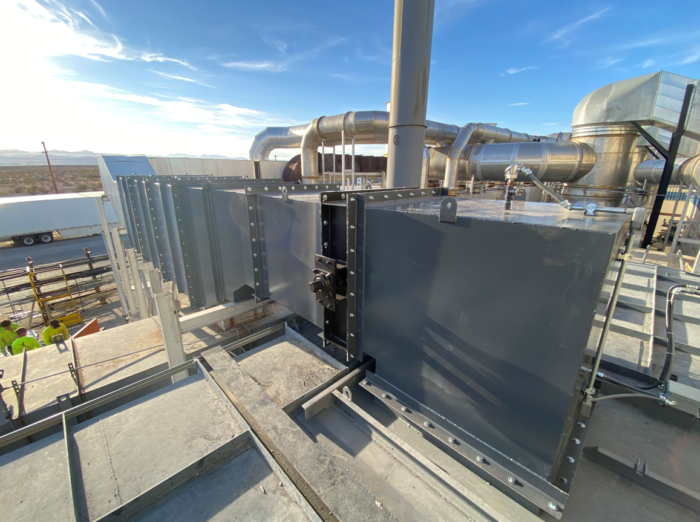
A Fortune 500 customer needed to replace a locked-up hot-side bypass damper and related ductwork along with repairing an insulated roof section on their large RTO.